
Indian Railways Introduces Peer Review of DPRs by Retired Officers to Improve Project Quality
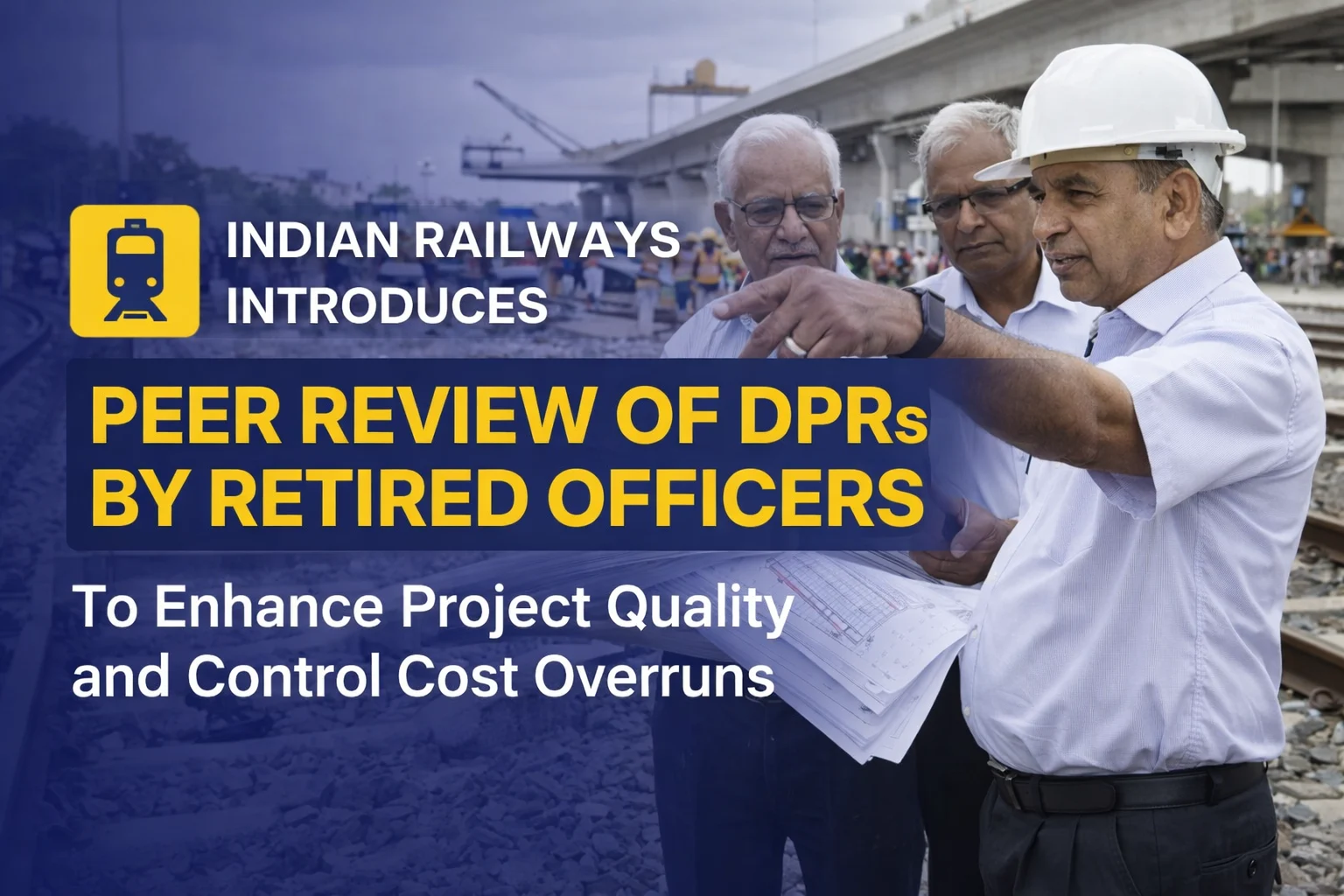
In a significant move aimed at improving the quality of railway infrastructure planning and curbing time and cost overruns, the Railway Board has issued a comprehensive policy mandating peer review of Detailed Project Reports (DPRs) by experienced retired government officers. The new system will initially be implemented on a pilot basis across Zonal Railways.
The decision comes amid repeated observations that gaps at the DPR stage—despite existing guidelines—often lead to changes in scope, escalation of costs, and delays during project execution. Indian Railways largely relies on consultants for Final Location Surveys (FLS) and DPR preparation, making the robustness of these reports critical for successful project delivery.
Peer Review by Sector Experts
Under the new framework, every DPR will undergo an independent peer review by a “Sector Expert”, defined as a retired Indian Railway Service of Engineers (IRSE) officer of Senior Administrative Grade (SAG) or above, with at least five years’ experience in railway infrastructure planning or execution. The maximum age for engagement has been capped at 75 years.
The peer review mechanism is intended to ensure technical soundness, cost optimisation, constructability, and compliance with safety and environmental standards before projects move into execution.
Pilot Implementation Across Zones
As part of the pilot phase, each Zonal Railway has been directed to select three projects for peer review under the new policy. The Railways Board has asked Zonal Railways to submit feedback within six months, covering the practicality of the system, its effectiveness in improving DPR quality, and suggestions for refinement.
Scope of Peer Review
The sector experts will conduct a detailed examination of DPRs, including:
- Technical feasibility and engineering design
- Cost estimates and justification of quantities
- Alignment, survey data, and proposed structures
- Environmental and safety considerations
- Constructability, phasing of work, and availability of materials
Site visits may also be undertaken wherever necessary to validate alignment and feasibility. The expert will submit a comprehensive report highlighting deficiencies, risks, and recommendations for improvement.
Engagement Process and Safeguards
Sector experts will be empanelled annually by Zonal Railways through a public notice and screened by a designated empanelment committee. The General Manager of the Zonal Railway will be the competent authority for final approval.
To prevent conflict of interest, experts will not be assigned projects linked to their previous postings or professional associations. Strict confidentiality norms have been laid down, and any breach may result in immediate termination of engagement.
To ensure timely completion, an expert may review no more than four DPRs at any given time across all Zonal Railways.
Honorarium and Funding
The Railway Board has fixed an honorarium of ₹1 lakh per day for sector experts, calculated based on the sanctioned FLS length—one day for every 50 route kilometres in plain areas and 30 kilometres in hilly terrain, rounded up to the next full day.
Payments will be released in two stages:
- 80% after submission and approval of the draft report
- 20% after acceptance of the final report
The expenditure will be charged to the preliminary expenses of the concerned capital work, with no separate budgetary allocation required, as the cost is already included in revised FLS rates.
Aimed at Reducing Overruns
By institutionalising independent technical scrutiny at the DPR stage, Indian Railways aims to reduce avoidable revisions during construction, improve cost realism, and ensure that projects are execution-ready before sanction.
The policy has been issued with the approval of the Member (Infrastructure), Member (Finance), and Chairman & CEO, Railway Board, and is expected to play a key role in strengthening project governance across the railway network.
View Official Letter:
 Loading…

 Reload document
  Open in new tab
 📢 Stay Updated with GConnect
Join our Whatsapp channels for the latest news and job updates:
Join GConnect News Join GConnect Jobs
GConnect News

GConnect Jobs