
How to Use CGHS Card in a Private Empanelled Hospital
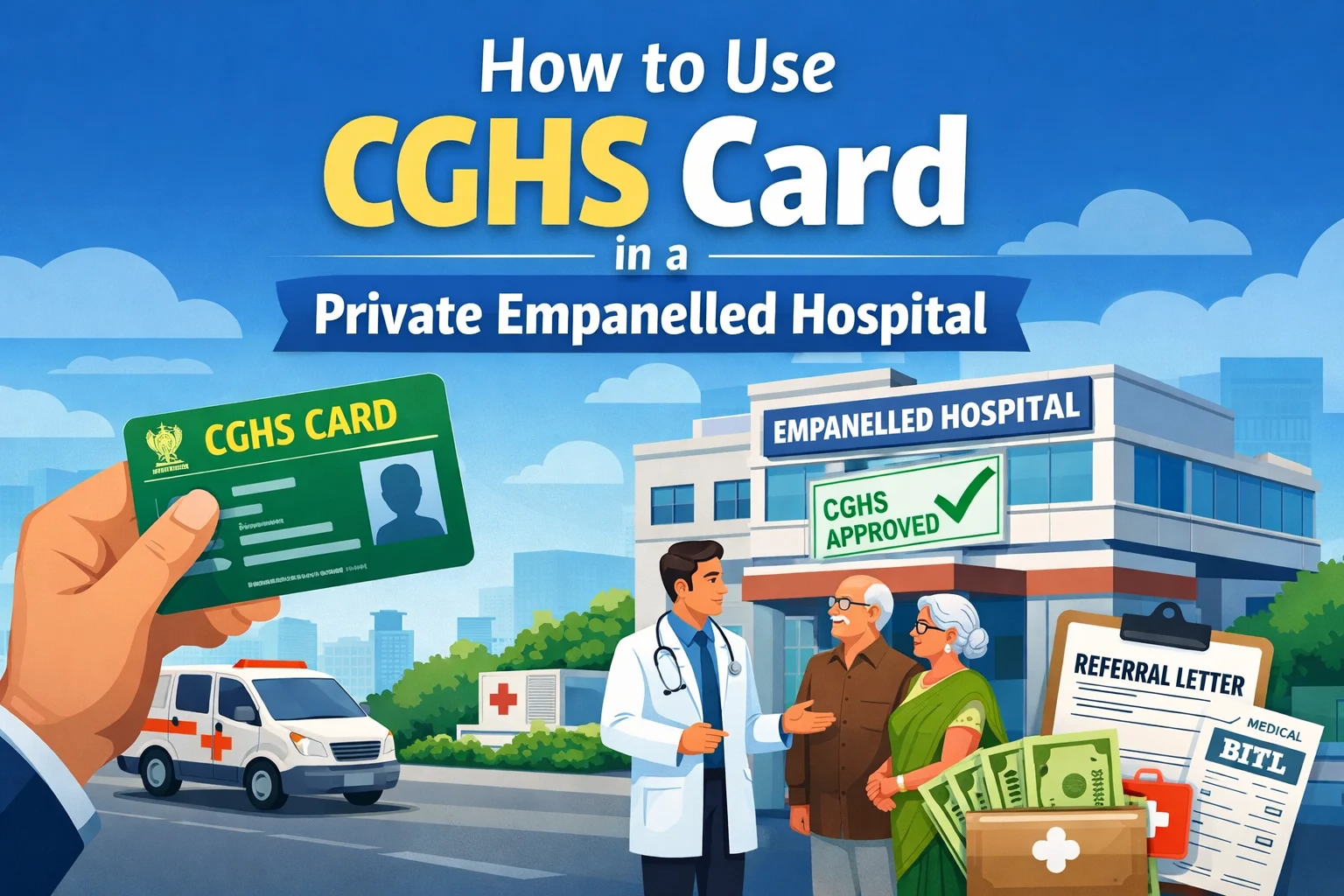
The Central Government Health Scheme (CGHS) allows its beneficiaries to take treatment not only in CGHS dispensaries and government hospitals, but also in CGHS-empanelled private hospitals.
However, the process is slightly different from a normal hospital visit—especially when it comes to referrals, approvals, and payments.
This guide explains step-by-step how to use your CGHS card in a private empanelled hospital without confusion.
What Is a CGHS Empanelled Private Hospital?
A CGHS-empanelled hospital is a private hospital that has been officially approved by Central Government Health Scheme to treat CGHS beneficiaries at pre-fixed CGHS rates.
These hospitals are empanelled for:
- OPD consultations
- Diagnostic tests
- Medical procedures
- Surgeries and specialized treatments
⚠️ Treatment is allowed only for approved procedures and only at CGHS rates.
Step 1: Check Whether the Hospital Is CGHS-Empanelled
Before visiting any private hospital, confirm its empanelment status.
You can check:
- On the CGHS official website
- At your CGHS dispensary
- By asking the hospital’s reception (but always cross-verify)
Make sure:
- The hospital is empanelled for your city
- The required treatment/procedure is covered
Step 2: Understand Whether Referral Is Required
This is where many beneficiaries get confused.
When Referral Is Required
Referral from CGHS is mandatory for:
- Planned surgeries
- In-patient admissions
- Costly investigations (MRI, CT scan, etc.)
- Specialized treatments
When Referral Is Not Required
Referral is not required for:
- Emergency treatment
- Life-threatening conditions
In emergencies, you can go directly to the nearest empanelled hospital.
Step 3: Get a Referral Letter (For Planned Treatment)
For non-emergency cases, follow this process:
- Visit your CGHS dispensary
- Consult the Medical Officer (MO)
- MO issues a referral letter specifying:
- Hospital name
- Diagnosis
- Tests or procedure
- Validity period
Carry this referral letter to the empanelled hospital.
Step 4: Carry Required Documents to the Hospital
When visiting the empanelled hospital, keep these documents ready:
- Original CGHS card
- Photo ID (Aadhaar / PAN / Pensioner ID)
- Referral letter (if applicable)
- Previous medical records
- Emergency slip (if treated in emergency)
Hospitals usually verify your CGHS details at the billing desk before treatment.
Step 5: Treatment and Payment Process
Cashless Treatment (Limited Cases)
Some treatments are cashless if:
- Prior approval is obtained
- Hospital offers CGHS cashless facility
- Treatment falls strictly within CGHS package
Reimbursement-Based Treatment (Most Common)
In most cases:
- You pay the bill upfront
- Hospital charges CGHS approved rates
- You later apply for CGHS reimbursement
Step 6: Emergency Treatment in Private Empanelled Hospital
In emergencies:
- Go directly to the empanelled hospital
- Inform them you are a CGHS beneficiary
- Show your CGHS card as soon as possible
After discharge:
- Inform your CGHS dispensary
- Submit emergency medical records
- Apply for reimbursement (if payment was made)
CGHS generally allows emergency claims even without prior referral, provided the emergency is genuine.
Step 7: Claim CGHS Reimbursement (If Applicable)
If you paid the hospital bill yourself:
- Collect all original documents:
- Bills
- Discharge summary
- Prescriptions
- Investigation reports
- Submit reimbursement claim at CGHS
- Track claim status through CGHS portal or dispensary
Reimbursement is processed as per CGHS rates, not hospital MRP.
Important Points to Remember
- Always prefer CGHS-empanelled hospitals
- Referral is crucial for planned treatments
- Emergency treatment is allowed without referral
- Reimbursement is limited to CGHS approved rates
- Keep all original documents safely
Frequently Asked Questions (Quick)
Can I use CGHS card in any private hospital?
No. Only in CGHS-empanelled private hospitals.
Is cashless treatment guaranteed?
No. Cashless treatment depends on approval and hospital policy.
Do pensioners and serving employees follow the same process?
Yes, the procedure is largely the same.
Final Word
Using a CGHS card in a private empanelled hospital is simple once you know the rules.
A little preparation—checking empanelment and getting a referral—can save you money, time, and stress.
📢 Stay Updated with GConnect
Join our Whatsapp channels for the latest news and job updates:
Join GConnect News Join GConnect Jobs
GConnect News

GConnect Jobs