
CVC Issues Comprehensive Master Circular on Role and Protection of Chief Vigilance Officers
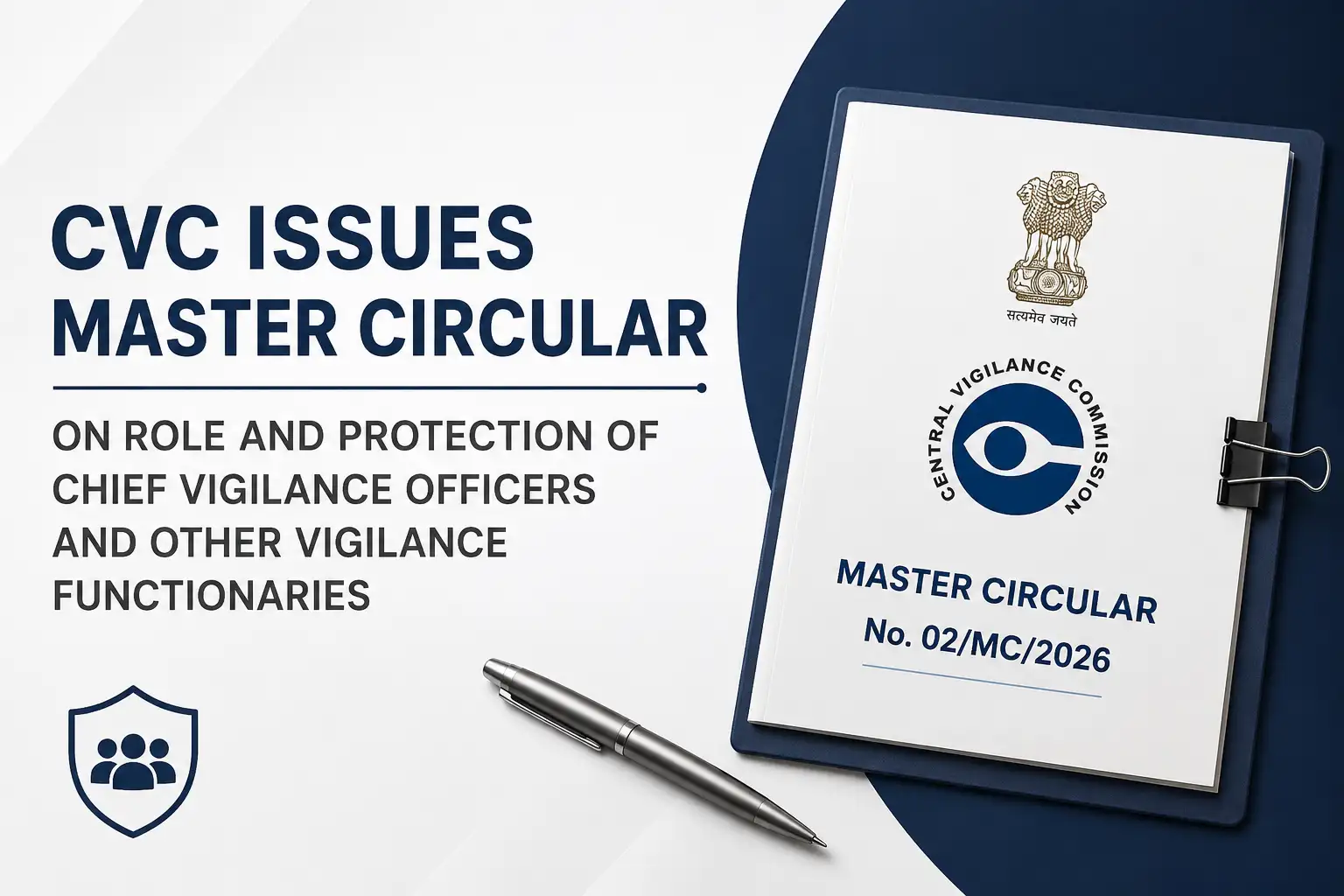
The Central Vigilance Commission (CVC) has issued Master Circular No. 02/MC/2026, consolidating and updating all existing guidelines relating to the role, functions and protection of Chief Vigilance Officers (CVOs) and other vigilance functionaries across Central Government organisations.
The new Master Circular, issued on 27 July 2026, supersedes all previous circulars, office memoranda and guidelines on the subject. It is intended to provide a single, comprehensive reference document for Ministries, Departments, Central Public Sector Enterprises (CPSEs), Public Sector Banks, Insurance Companies and other organisations falling under the jurisdiction of the Commission.
Consolidated guidance for vigilance administration
The circular clearly defines the responsibilities of Chief Vigilance Officers, who serve as the nodal officers for vigilance administration within their organisations and act as the primary interface with the Central Vigilance Commission.
According to the CVC, the responsibilities of CVOs broadly cover:
- Punitive vigilance functions, including handling complaints and disciplinary proceedings.
- Preventive vigilance measures to identify corruption-prone areas and strengthen internal controls.
- Participative vigilance initiatives aimed at promoting transparency, integrity and good governance.
- Monitoring the timely processing and disposal of vigilance cases.
- Submission of periodic reports and compliance with CVC timelines.
- Coordination with investigative agencies such as the CBI and other competent authorities, wherever required.
Stronger safeguards for vigilance officers
One of the major features of the Master Circular is the emphasis on protecting Chief Vigilance Officers and other vigilance functionaries from victimisation while discharging their official duties.
The Commission has reiterated that vigilance officials should be able to function independently without fear of retaliation. The circular lays down safeguards relating to transfers, reporting arrangements, disciplinary matters and complaints against vigilance officials, besides providing protection even after completion of their tenure in vigilance units under specified circumstances.
Timely disposal of vigilance cases
The Master Circular also places significant emphasis on the timely processing of vigilance cases. CVOs have been directed to closely monitor pending investigations, disciplinary proceedings and implementation of CVC advice so that cases are concluded within prescribed timelines, particularly where officials are due for promotion or retirement.
Coverage of subsidiaries and joint ventures
The consolidated guidelines also address vigilance administration in subsidiaries, joint ventures and special purpose vehicles, besides prescribing procedures for quarterly reporting, structured reviews, vigilance inspections, management audits and other important vigilance functions.
Earlier instructions superseded
With the issuance of Master Circular No. 02/MC/2026, all earlier CVC circulars, guidelines and instructions issued on the role and functions of Chief Vigilance Officers and protection of vigilance functionaries stand superseded. The Commission has invited suggestions and feedback on the new Master Circular for future improvements.
View Master Circular:
 Loading…
 Reload document
 Open in new tab
 📢 Stay Updated with GConnect
Join our Whatsapp channels for the latest news and job updates:
Join GConnect News Join GConnect Jobs
GConnect News

GConnect Jobs